HTC
Sense
Visual design, UX and illustration for HTC Sense—HTC's Android experience layer shipped across flagship phones worldwide, 2011–2017, spanning design teams in Seattle and Taipei.
overview
HTC Sense was HTC's custom Android experience layer, shipped across the company's flagship phones from 2011 to 2017. I worked on visual design, UX, illustration and art direction across several generations of it, between design teams in Seattle and Taipei.
Six years on one platform means you inherit your own earlier decisions and get to correct them, which is most of what the two sections below are.
blinkfeed
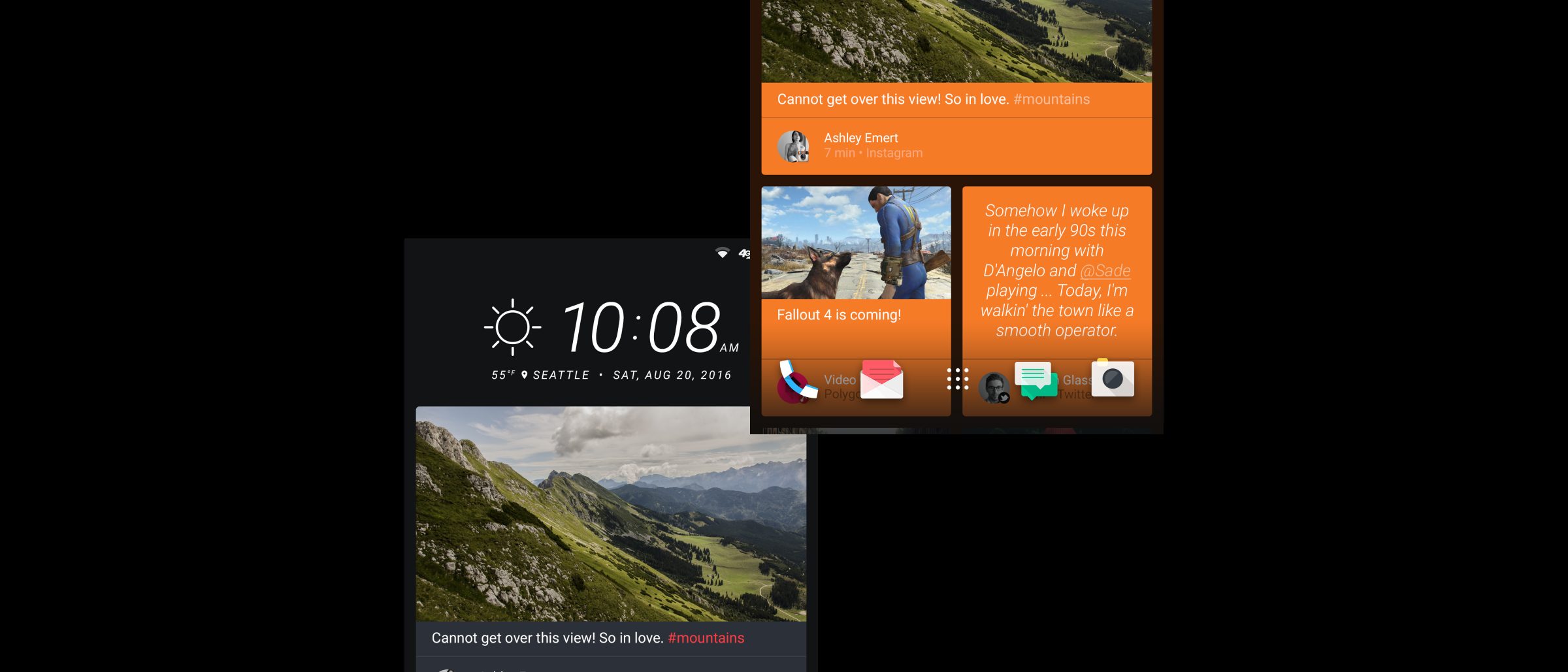
BlinkFeed was Sense's news aggregator, and it sat on the home screen rather than behind an icon, so it had to hold up to being seen constantly. On Sense 6 I designed it as a card grid with an article detail page. That grid gave every story the same weight whether it was a photo essay or a one-line headline, so by Sense 8 I rebuilt it as a staggered editorial layout paired with a colour-blocked tile grid, which let the feed carry more visual range across story types.
FIG_01 — BlinkFeed home screen across Sense 6 and Sense 8, card grid vs. staggered editorial layout
camera
For Sense 6 I designed the primary camera UI: the focus ring, quick exposure control and scene selection, plus a custom settings screen behind them. Everything in a camera interface competes with the photo you are trying to take, so the work was mostly about how little could be on screen and how fast each control could get out of the way again.
FIG_02 — camera UI: focus ring, exposure and scene selection, custom settings
outcome
These designs shipped across multiple generations of HTC's flagship Android devices, reaching customers globally through six years of Sense releases.